
Pakistan, which has propped up the new Taliban leadership, would be keen to use its influence over the group to neutralise India's presence in the region.

'Omar Khorsani has called repeatedly for the most barbaric of attacks. He is very adept on social media. He is, in other words, eerily similar to the ISIS leader Baghdadi.' 'The crux of the army's 'strategic asset' policy -- its policy of regarding militants as those that can help Pakistan pursue its regional interests -- is that Pakistan needs help in weakening India or in keeping its presence minimal in the region.' Michael Kugelman reveals what the world can expect next from the Tehreek-e-Taliban Pakistan, the terrorists responsible for the Peshawar school massacre.

Central Intelligence Agency chief John Brennan flew to Pakistan last week for a clandestine meeting with army chief Gen Raheel Sharif to discuss a possible military operation against militants in the country's northwest, a media report said on Monday.
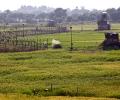
'The incidents have remained confined to the paramilitary forces on both sides with both the armies scrupulously avoiding getting involved. While this incident has been going on, the LOC has been reasonably quiet. Cross border firing achieves no tactical or strategic aims and is more a symptom of hostility. Unfortunately, India has to learn to live with this. Like Israel, we must construct shelters for the border populations and be ready to retaliate in kind,' says Colonel Anil A Athale (retd).
'Three security challenges could emerge shortly. The possibility (almost bordering on certainty) is as certain as the fact that night follows day: A terrorist attack by a Pakistan-based group. Chinese intrusion on the border.Communal tension/riots.' Colonel Anil A Athale (retd) explains what the Modi Sarkar needs to be prepared for.

'Peace talks with Pakistan are like accepting a dinner invitation from cannibals and hoping to return alive,' says Colonel Anil A Athale (retd).
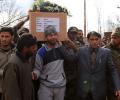
'The best course for India is to wait out the implosion that is bound to take place in Pakistan sooner than later.' 'We have to ensure that the fallings debris from a collapsing State does not damage us,' says Colonel Anil A Athale (retd).

'Whether it's investments in Kashmir, building naval facilities, or selling top-of-the-range military equipment, Pakistan could well benefit more under Xi's watch.' 'Do Chinese concerns about the 'Islamisation' of Pakistan give it pause about how quickly to move forward with security and economic projects? At the moment the indication is quite the opposite: China is doubling down on its support to Pakistan, partly because of its fears about where the country is headed.'
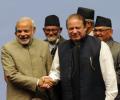
'Modi has said he has been made the PM of India not to do small things but big things. What bigger thing can there be than to have peace with Pakistan and in the neighbourhood?'

After weighing all the costs and benefits, the next administration is likely to reduce and restructure assistance to Pakistan but not to end it altogether, says Daniel S Markey.

The year 2014 is coming to an end. It was the year of conflict, the year of strife. Year 2014 will be remembered for several reasons -- the rise and threat of the Islamic State, the downing of two Malayasia Airlines aircraft and the sudden and effective way of using hastags on social media to generate a buzz about the event. After all, who can forget #theicebucket challenge and the phenomenon it grew into. Read on as we bring you an overview of international news and events of 2014.
